Researcher · Builder · Entrepreneur
Materials Scientist.
Exploring properties to deliver
solutions for real-world problems.
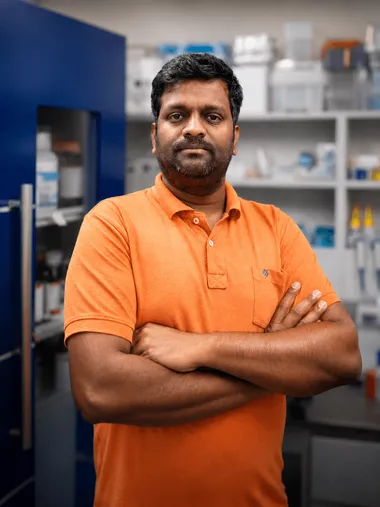
I'm Prabakaran Shankar, a materials scientist working across functional materials, nanostructures, polymers, and sensing. I also build systems for research work environments and apply AI to research and its applications, turning practical problems into structured, useful solutions.
Digital portfolio → prabakaranshankar.dev
Research
Understanding materials through experiments, mechanisms, and unexpected observations.
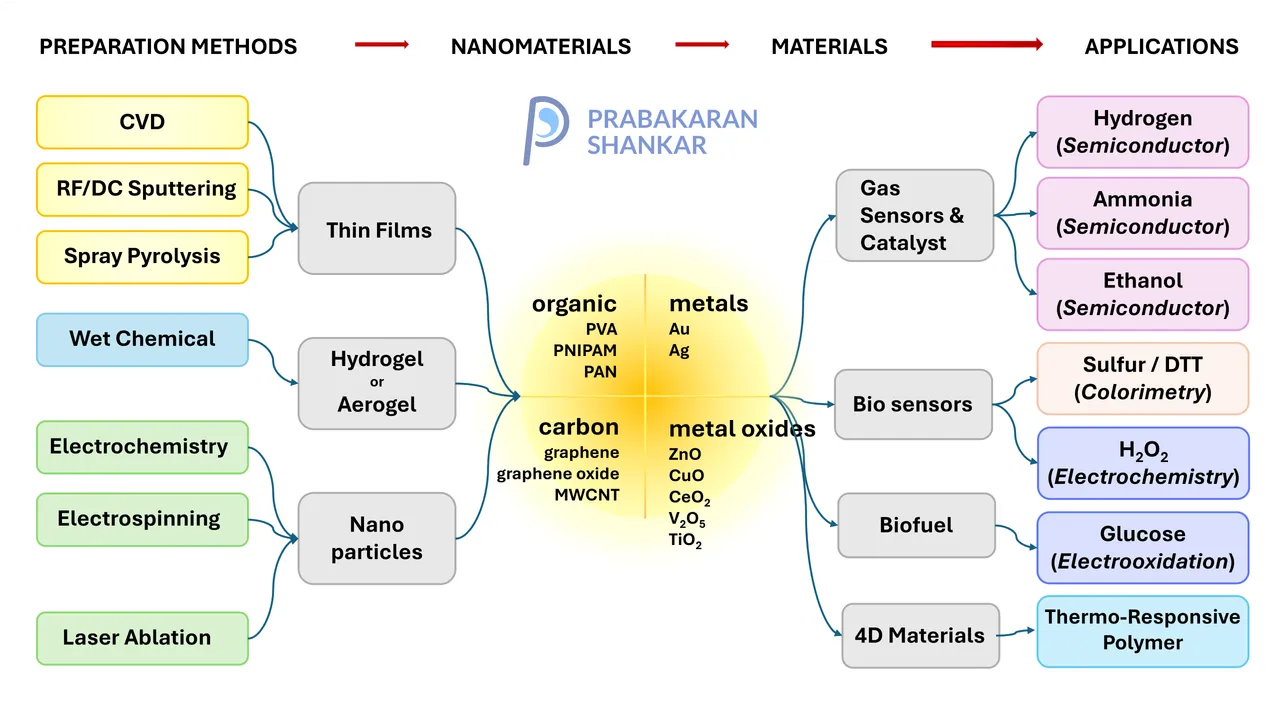
My research spans functional materials, nanostructures, polymer systems, and sensors. I am particularly interested in observations that initially look like experimental irregularities but reveal a deeper physical or chemical mechanism when investigated systematically.
Functional Materials
Nanomaterials, polymeric systems, thin films, and engineered interfaces.
Sensors
Materials and architectures that translate molecular or environmental changes into measurable signals.
Featured research direction
Research worth looking at more closely
Crosslinking-gradient-mediated self-organization of nanofiber networks
What began as an unexpected morphological change during post-treatment developed into a study of how crosslinking gradients, internal stress, and network constraints can reorganize electrospun fibers.
A developing research story. Publication details will be linked when available.
Research collaboration & consultation
When the data are there, but the next step isn’t obvious.
Research does not always become difficult because an experiment failed. Sometimes the harder question is what an unusual observation means, whether different datasets support the same explanation, or what experiment would distinguish competing mechanisms.
I work best with researchers, principal investigators, and early-career scientists in materials-related research who need an additional scientific perspective on a specific problem.
Research Direction
Clarifying the question, comparing possible explanations, and identifying what evidence is needed next.
Experimental Interpretation
Connecting characterization results across datasets instead of treating each measurement independently.
Data-to-Claim Alignment
Separating what the evidence demonstrates from what remains a hypothesis or interpretation.
Manuscript Development
Strengthening scientific structure, figures, discussion, and claims without overstating the evidence.
Stories
The result is only the end of the story.
Research papers document what survived the scientific process. They rarely capture the observation that started the work, the experiment that failed, the interpretation that changed, or the reasoning that finally connected the evidence. I want to preserve that part too.
Research Stories
How an observation became a question, an experiment, and eventually a result.
Researcher Stories
The people, decisions, and circumstances behind scientific work.
Life & Building
Experiences that shaped how I approach problems, choices, and entrepreneurship.
Beyond the lab
Research is my profession. Building is part of how I think.
The same problem-solving approach that guides my research has also led me to build websites, operational software, domain and email infrastructure, and service workflows. These projects now have a dedicated technical portfolio.
Research projects
Experimental studies, materials systems, and research questions developed through laboratory work.
Academic websites
Clear, durable publishing systems for researchers and knowledge-driven organizations.
Service infrastructure
Document workflows, communication systems, and operational tools for Verified Apostille.
NViews platforms
Digital foundations for research careers, stories, media, and practical knowledge.
For technical architecture, development stacks, and case studies behind these systems,visit prabakaranshankar.dev →
Research in publication
A verifiable record of research and scholarly work.
Explore publication records and researcher profiles at their source. No manually maintained headline metrics are used here.
Two complementary paths
Science is where I investigate. Building is how I translate ideas into practice.
In research, I study materials, interfaces, and functional systems with an emphasis on understanding why a phenomenon occurs—not only whether it works. Outside the laboratory, I design websites, digital infrastructure, and operational systems to solve practical problems.
The common thread is the same: observe carefully, identify what matters, test a solution, and improve it.
Start with the problem
Something in your research doesn’t quite make sense?
An unexpected result, conflicting characterization, an unclear mechanism, or uncertainty about what experiment should come next can be enough to start a useful conversation. Tell me what you are studying, what you observed, and where the uncertainty begins.